Research & Science
Advancing sleep science. Changing how we think about health.
I study what shapes sleep, how it affects physical and mental health, and which interventions improve people’s lives. My work connects behavioral sleep medicine, population health, neuroscience, and technology.
The focus is sleep in the real world, where biology, behavior, and living conditions meet.

Career research funding
Total research funding across projects on which Dr. Grandner has served as principal investigator or co-investigator.
Reflects project funding, not amounts personally awarded to Dr. Grandner.
Explore the research →Citations
A body of scholarship informing research across sleep science, health, and clinical practice.
Google Scholar, all-time citations, November 16, 2026.
View Google Scholar →h-index
A measure of sustained scholarly influence: 85 publications have each been cited at least 85 times.
Google Scholar, all-time h-index, November 16, 2026.
View the scholarly record →Research approach
From the conditions of sleep to the possibilities for change.
Context
Why do people sleep the way they do?
We study the factors that shape sleep, from individual beliefs and behaviors to families, work schedules, neighborhoods, and social conditions. Understanding these influences helps us identify where an intervention is likely to help and what may get in its way.
Consequences
What does sleep change?
We examine how sleep relates to cardiovascular and metabolic health, mood, thinking, and performance. A central challenge is determining when sleep contributes to these outcomes directly and when it reflects another underlying problem.
Intervention
What can improve sleep and health?
We develop and evaluate approaches that people can use in their daily lives. The goal is to connect what we learn about sleep with interventions that improve health, including approaches delivered through communities and organizations.
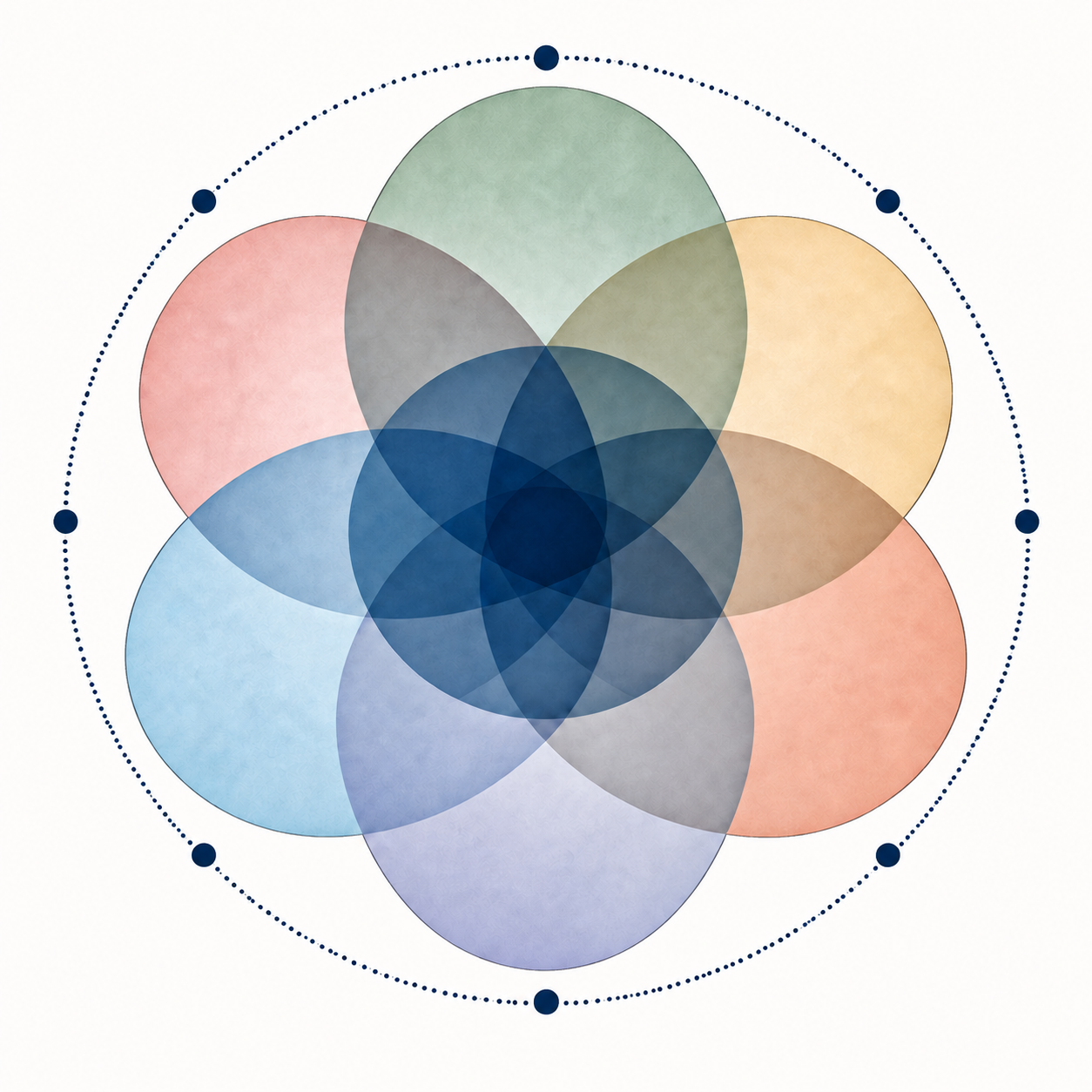
These questions are closely connected. Our population studies help identify patterns that need explanation. Laboratory studies examine possible mechanisms. Intervention studies test whether changing sleep changes an outcome. My work with Fabian-Xosé Fernandez, including our framework in Science, brings these perspectives together.
Selected contributions
A broader understanding of sleep health.
Sleep in context
The social-ecological model I introduced with colleagues connects sleep with individual, social, and societal influences. This perspective guides my work on disparities and community partnerships, including our research at the US–Mexico border.
Explore context and community research →Sleep as cardiovascular health
I helped develop the American Heart Association’s Life’s Essential 8, which added sleep duration to its cardiovascular health framework, and served as vice chair of its statement on multidimensional sleep health. This work brings timing, regularity, quality, and functioning into the conversation alongside hours slept.
Explore cardiometabolic and circadian research →The waking mind at night
The Mind After Midnight framework asks how nighttime wakefulness may change emotion, reward processing, and cognitive control. I developed the hypothesis with colleagues and now lead an NIMH-funded project with Fabian-Xosé Fernandez to test its mechanisms, within a broader program on sleep and mental health.
Explore mental health and nighttime cognition →From measurement to intervention
My work evaluates wearable sleep measurements and develops approaches to individualized sleep guidance and light exposure. The aim is to connect what a tool measures with decisions that can help people, while testing its performance and limitations.
Explore measurement and intervention →Science into practice
Research should change what people can do.
The purpose of this work is to improve what we can do about sleep. That means developing better clinical approaches, helping people make useful changes, and working with communities, athletic teams, and organizations to address the conditions that support healthy sleep. It also means training the next generation of researchers and clinicians to connect good science with real-world problems.
Explore the research areas and publications for more detail, or get in touch about collaboration and training. For study participation, contact the team to ask about current opportunities. Please keep personal health information out of an initial inquiry.